Which Sink Material Is Best for Bathroom Spaces?

08 August 2025
The choice of material that goes into the design of a bathroom sink is very important, especially in the sense of creating an optimal, functional, durable, and presentable element.
There are many ways that people have to choose between classic porcelain and the newest concrete. It is a good idea to know the strengths and weaknesses of each of these types of sink material. Homeowners can find out how to make balanced choices between fashion, ease of maintenance, and cost while also considering which sink material is best for bathroom use based on their specific needs.
Porcelain: The Classic Choice for Bathroom Sinks
The most popular sink material used to make sinks in a bathroom is still porcelain, and with good reason. The material used to make this ceramic is fired to provide excellent durability, waterproofing, and longevity. The porcelain bathroom sinks are not porous, hence they are very resistant to stains, bacteria, and odors.
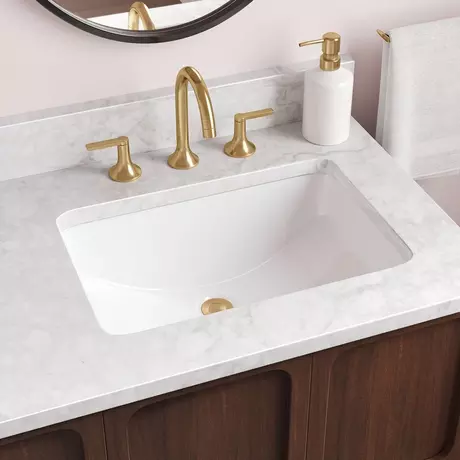
Benefits of porcelain sinks:
• Easy to clean with standard bathroom cleaners
• Available in numerous shapes, sizes, and colors
• Affordable price point for most budgets
• Heat and chemical resistant
• Long-lasting durability when properly maintained
Considerations:
• Can chip or crack if heavy objects are dropped
• May show water spots and soap residue
• Limited color options compared to other materials
Vitreous China: The Professional Standard
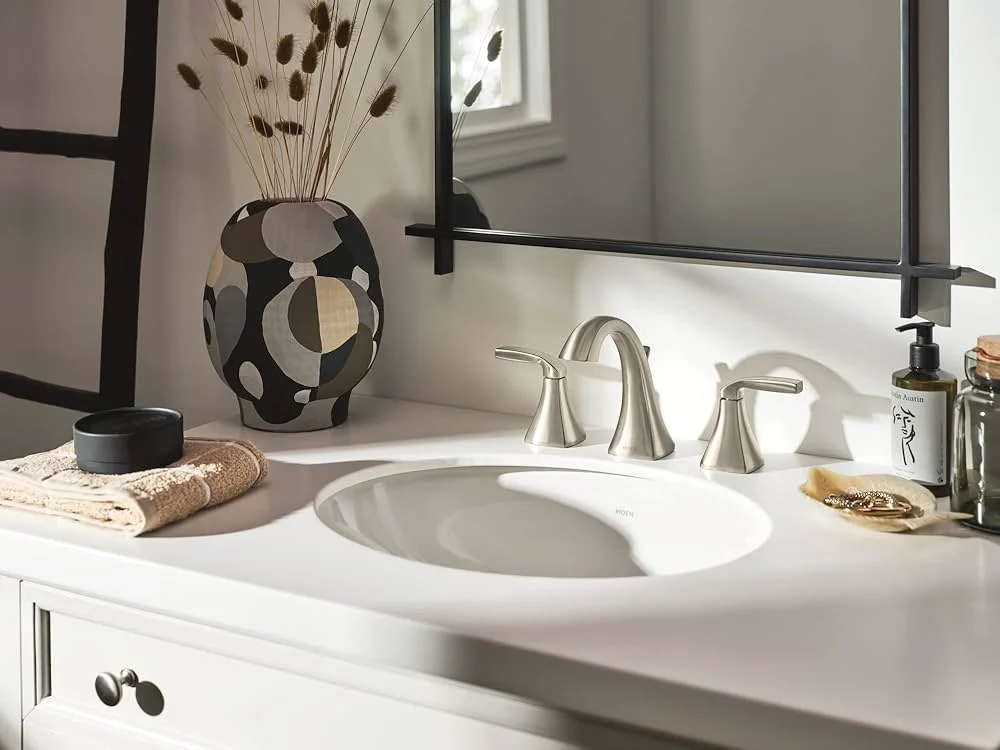
Vitreous china sinks are often mistaken to be porcelain sinks, except that, after being under the firing process, they are even more durable and have a glassy surface. It is the best material in commercial bathrooms and high-end residential units. Vitreous china is highly stain-resistant and is glossier longer when compared to ordinary porcelain. The non-porous surface of the material does not allow the growth of bacteria and, therefore, such material is great in bathroom vanity with sink setups for family bathrooms and powder rooms.
Natural Stone Bathroom Sinks: Luxury and Uniqueness
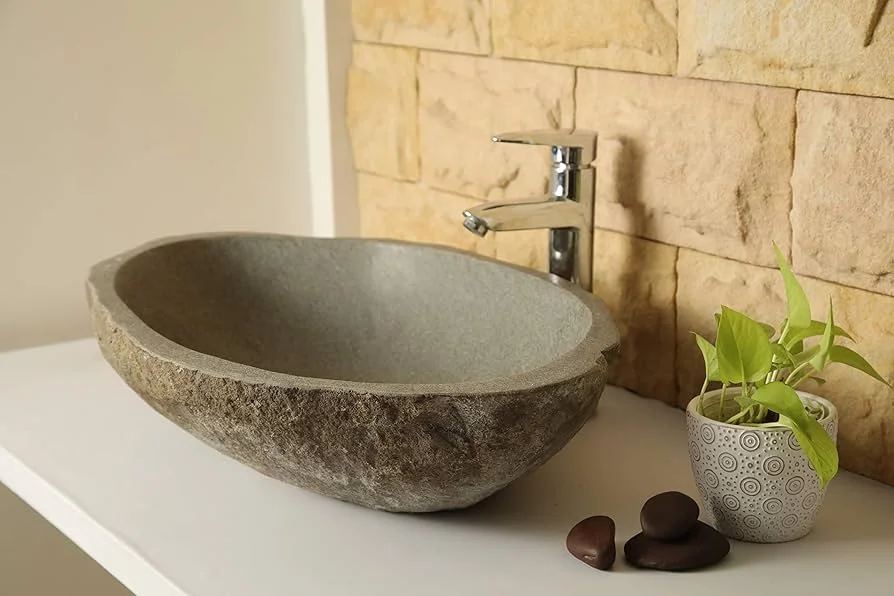
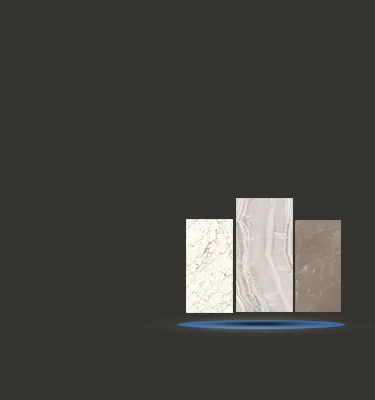
The whole idea of a stone bathroom sink prioritizes the natural beauty and grandiosity of any place. The stones are popular since they include granite, marble, travertine, and onyx, which have a variety of features. Granite sinks are very durable and resistant to heat, which makes them suitable for high-traffic bathrooms. Natural designs of the material make every sink individual and create character in bathroom designs. Marble sinks in bathrooms are more elegant than any other sinks, but they need additional care. It is vulnerable to acidic matter, such as some soaps and cleaners.
Stone sink considerations:
• Requires regular sealing to prevent stains
• Higher cost than ceramic options
• Professional installation recommended
• Natural variations in pattern and color
Stainless Steel: Modern and Hygienic
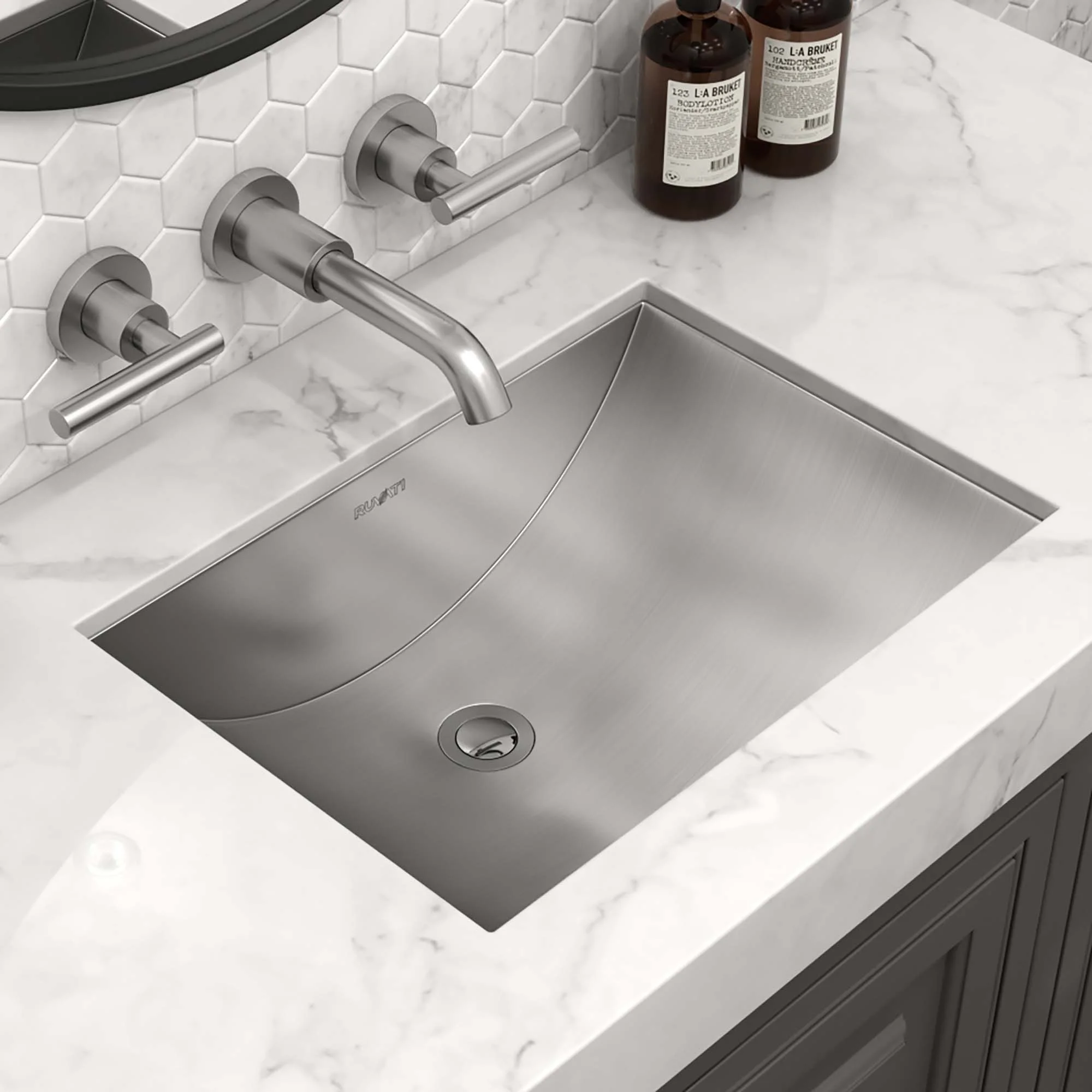
Although not that common in bathrooms, sink steel stainless versions are on the rise in modern designs. It is a great hygiene material with a contemporary aesthetic.
This is because stainless steel is naturally antibacterial, which makes it perfect in high-traffic bathrooms. The material is weatherproof, heat-resistant, and most chemicals, but it is more prone to displaying water spots and fingerprints than other materials.
Pros:
• Resilience: Stands up to dents, stains, and heat.
• Low Maintenance: Easy to clean and hygienic.
• Modern Style: Ideal for minimalist or industrial design themes.
Cons:
• Water Spots: Prone to showing watermarks and fingerprints.
• Noise Levels: Thin stainless steel can be noisy during use.
Glass Vessel Sinks: Contemporary Style Statement
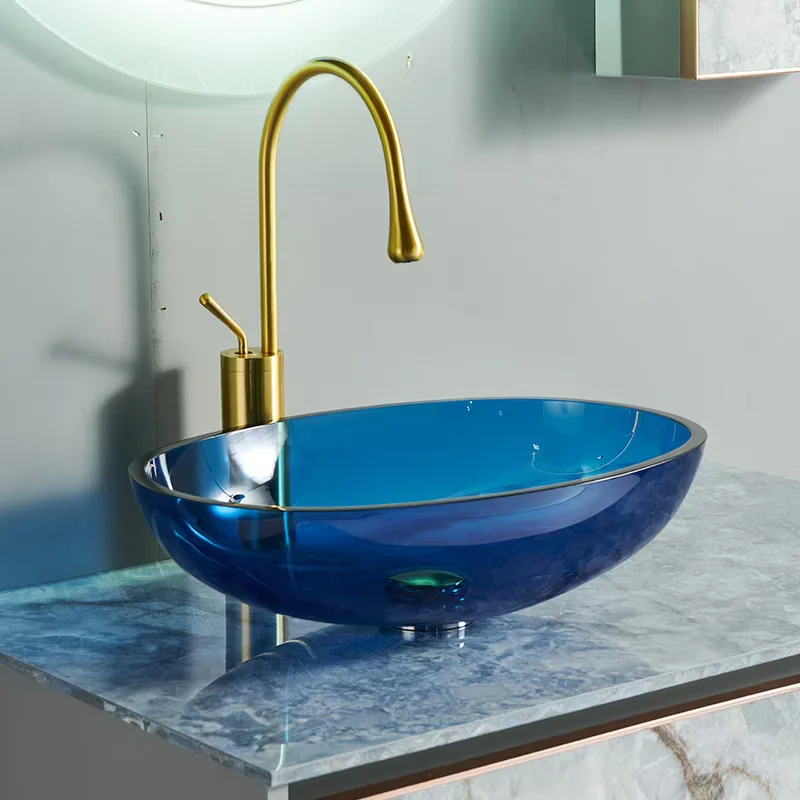
Glass bathroom sinks make amazing focal points in contemporary bathroom designs. They are obtainable in clear, frosted, or colored and the design can be limitless.
The tempered glass is safe and durable; however, such sinks need special care at the time of installation and cleaning. Glass is prone to water marks and soap scum on the surface, thus they demand regular cleaning to keep them looking shiny and clean.
Pros:
• Visual Appeal: Bold aesthetic with a high-end, luxurious feel.
• Variety: Comes in endless shapes, colors, and finishes.
• Easy to Clean: Smooth surfaces make wiping down effortless.
Cons:
• Fragility: While tempered glass is durable, it may crack or shatter under force.
• Visible Smudges: Water spots and dirt show up easily.
Best For:
• Bathrooms that emphasize visual appeal over heavy use, such as guest bathrooms.
Copper Sinks: Antimicrobial Properties and Rustic Charm
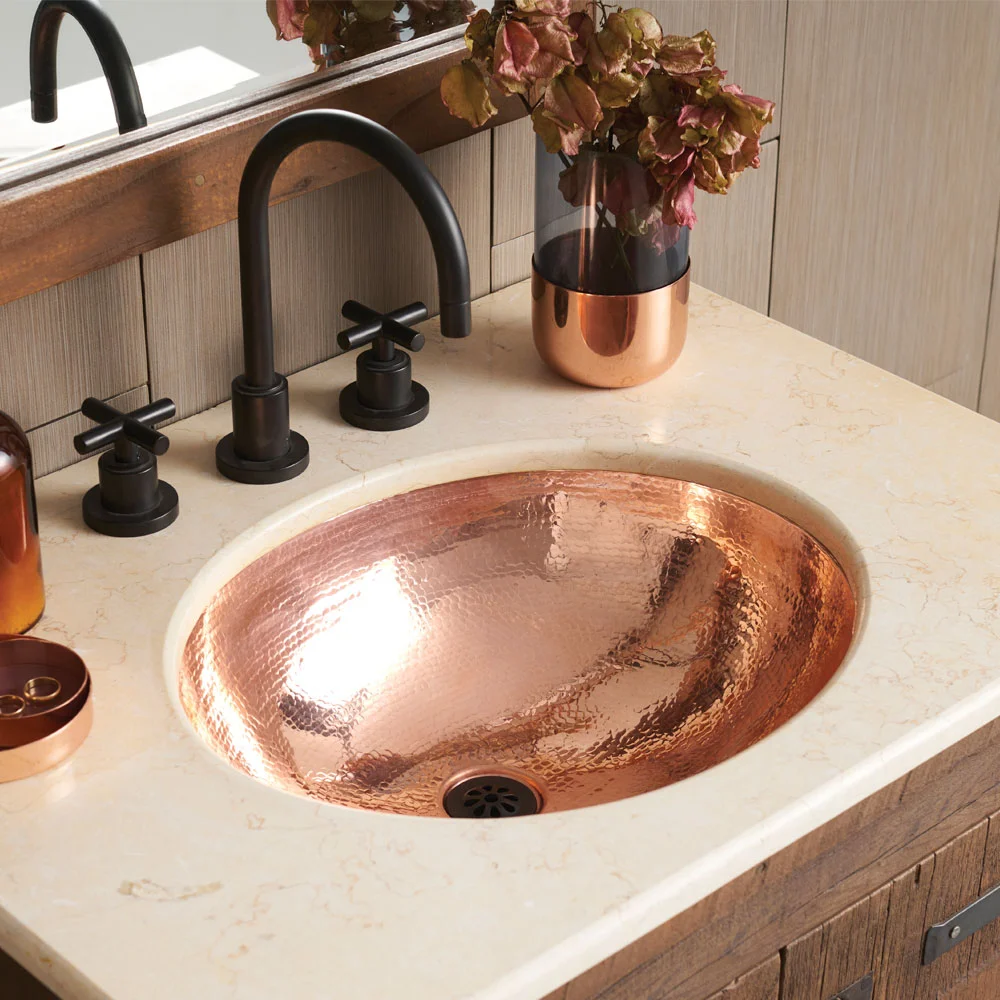
The copper bathroom sinks are naturally antimicrobial and they kill the bacteria on contact. This can create an exclusive, organic finish that evolves with use, as this material produces a lovely patina.
Copper does not demand much maintenance after it has oxidised to develop patina, but they should be aware that it will change its look. It is corrosion-resistant, which is an inherent property of the material, though it can last decades as well when maintained.
Solid Surface Materials: Seamless Integration
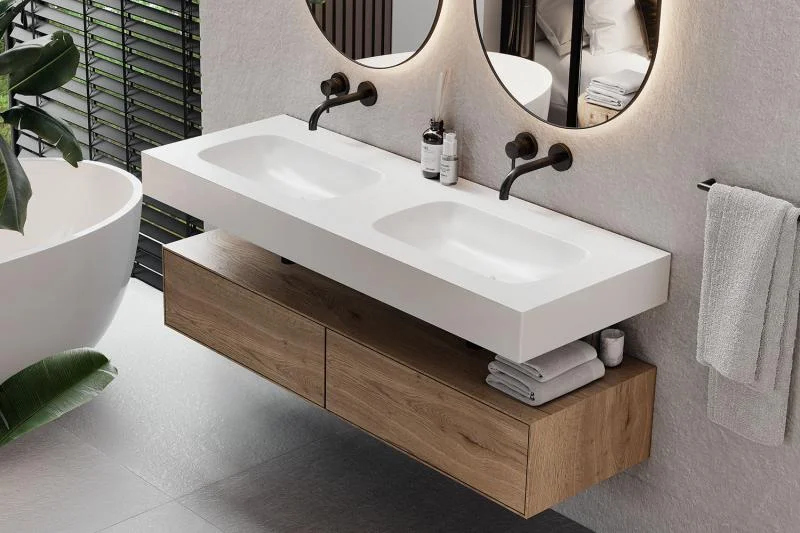
Bathroom sinks of this type (solid surface) can be of materials that are integrated with the vanity countertops (ex, Corian). They are man-made materials that can take just about any form and they can also be glued, in case they are broken.
Materials that comprise solid surfaces in the sink vs washbasin do not stain or breed bacteria and present a uniform color within the material. It is possible to sand out minor scratches and such sinks can be quite handy in a bathroom vanity with sink setting.
Pros:
• Customizable: Easy to shape, ideal for integrated sink–countertop designs.
• Non-Porous: Resistant to stains, mold, and bacteria.
• Repairable: Minor scratches and nicks can be sanded out.
Cons:
• Expensive: Not as cost-effective as ceramic or glass.
• Heat Sensitivity: Can discolor under high temperatures.
Best For:
• Modern bathrooms seek a streamlined, cohesive sink and countertop design.
Concrete: Industrial Chic and Customization
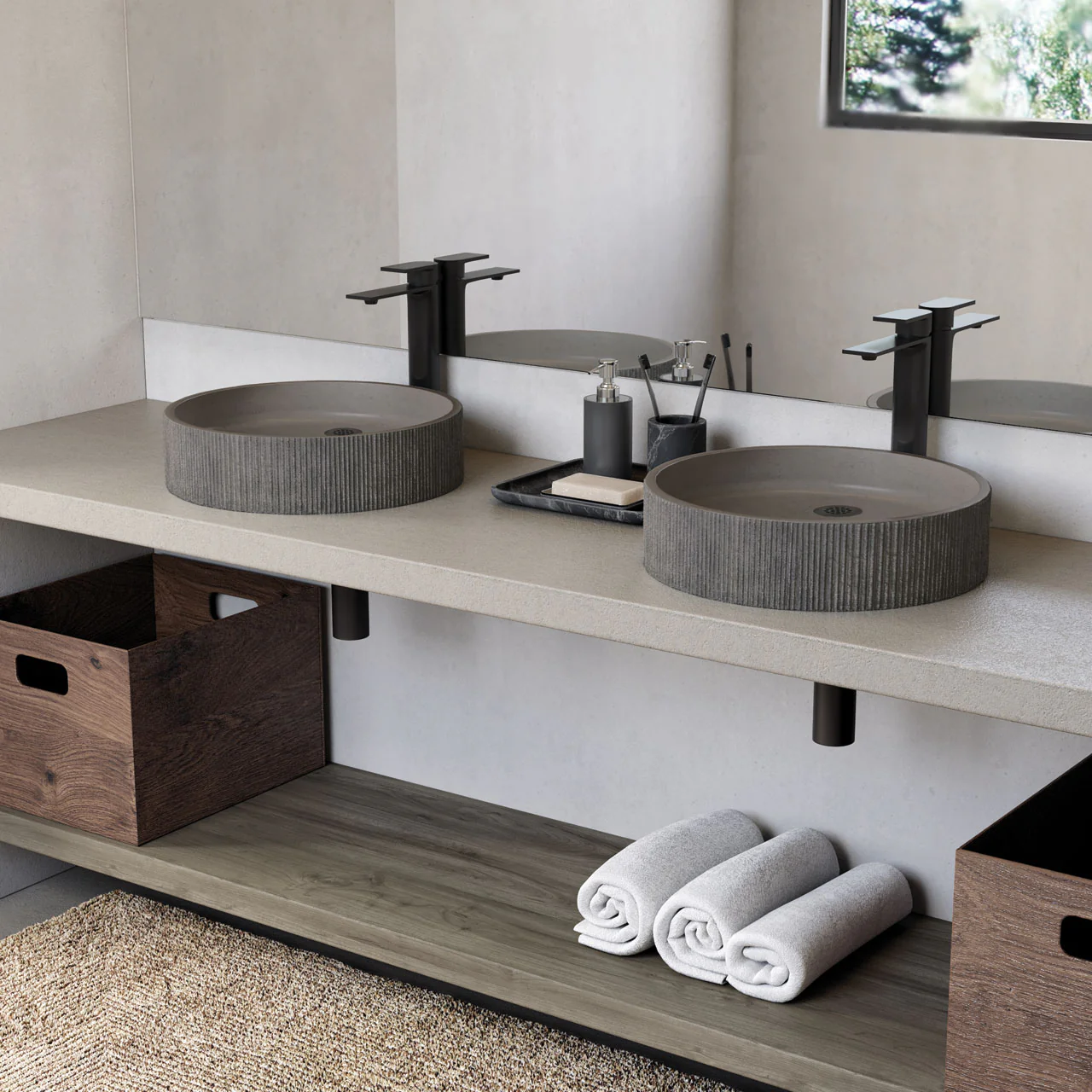
The concrete bathroom sinks are the best choice when it comes to customizing any modern industrial style of bathroom. No shape, size, or even color is off the table, in that this material can be cast into any desired shape, size, or color. Optimum-quality concrete, with surface sealed properly, is not subject to water damage and stains and is also very durable.
The thermal mass of the material helps the water remain at a steady temperature, making the experience of using the product more comfortable. Today, many custom bathrooms combine black composite sinks or white composite sinks with a raw concrete base for a striking modern contrast.
Cast Iron: Vintage Appeal with Modern Performance
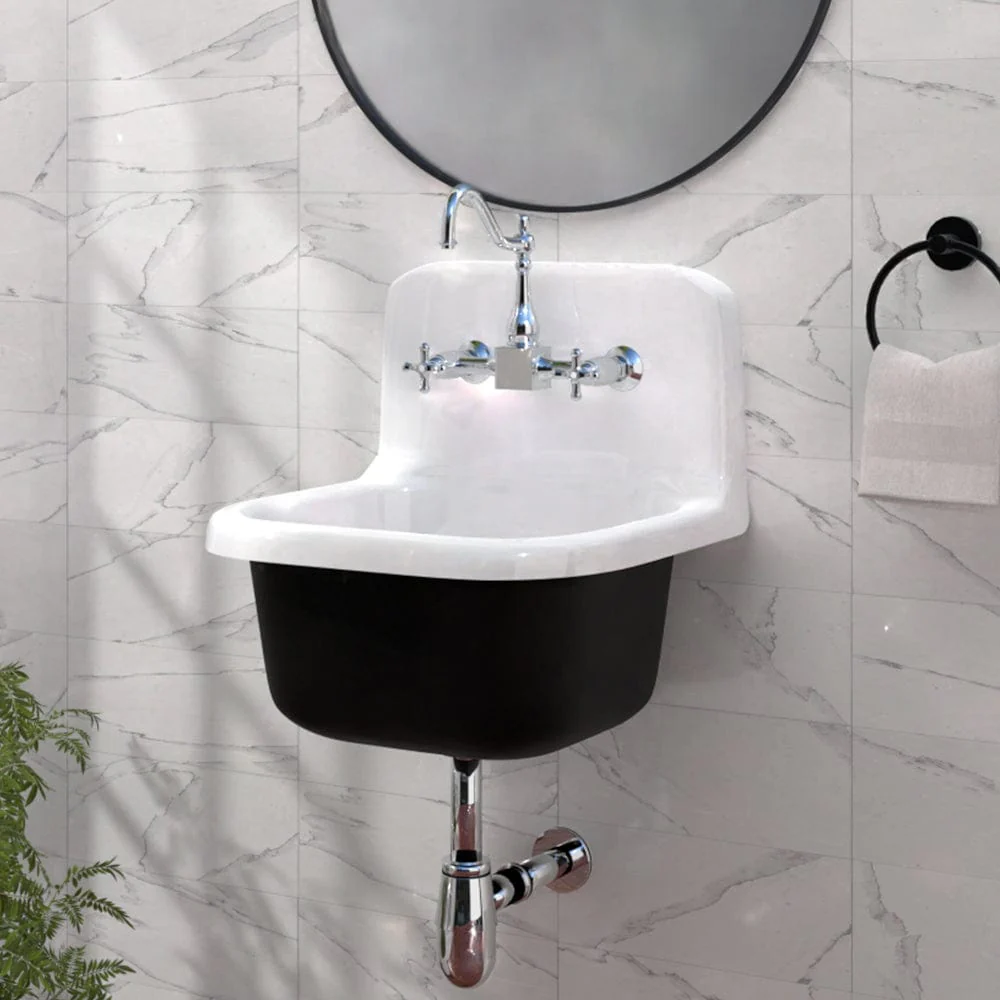
Cast iron sinks in the bathroom will have a retro look but will be modern in operation. These are sinks with a porcelain sink enamel finish on top of heavy-duty cast iron that is heavy-duty.
The weight is substantial, which makes it very stable and prevents noise, and the porcelain surface makes it easy to clean and is stain-resistant. The cast iron bath sink designs are specifically prevailing with traditional and farmhouse style bathrooms.
Pros:
• Strong and Heavy: Long-lasting with a substantial feel.
• Timeless Design: Pairs beautifully with vintage or traditional décors.
• Resistant Finish: The enamel coating resists scratching and staining.
Cons:
• Weight: Requires reinforced support during installation.
• Potential for Chipping: Enamel finish can wear over time.
Best For:
• Traditional or farmhouse-inspired bathrooms with a focus on durability.
Choosing the Best Bathroom Sink Material
When selecting the best bathroom sink material, consider these key factors:
• Durability requirements: High-use bathrooms need materials like vitreous china or granite that withstand daily wear.
• Maintenance preferences: Low-maintenance options include porcelain, composite sinks, and solid surface materials, while natural stone requires more care.
• Design style: Contemporary bathrooms might benefit from glass, sink steel stainless, or quartz sink, while traditional spaces suit porcelain or cast iron.
• Budget considerations: Porcelain and solid surface materials offer good value, while natural stone, quartz vanity tops, and custom concrete command premium prices.
• Installation complexity: Some vanity countertops and high-end composite sinks require professional installation, adding to overall project costs.
Expert Installation and Long-term Care
Proper installation needs to be done professionally in order to have the best performance and lifespan, regardless of the choice of sink material. Sealing and adequate support against improper plumbing connections and sealing are essential ways to avoid water damage and defective warranties.
Properly cleaning with the right materials extends the life of the sink and its appearance. Avoid harsh cleaners when cleaning sensitive material such as glass or marble, and refer to the producer recommendations all the time.
The overall ideal bath sink material in a bathroom combines your aesthetic consideration, demands, and your maintenance ability. Regardless of whether you prefer the tried and tested classic porcelain sink due to reliability or the exotic stone that poses more of a luxury category, picking the correct composite sink material provides a bathroom that will serve your family faithfully for many years to come.
Bluecera: Trusted Name in Premium Sanitaryware Solutions
Bluecera, the leading sanitary ware supplier, has a reputation for a wide product range of high-design products in the bathroom area that attain the latest trends of style and performance. Traditional or modern, Bluecera has an array of options available in washbasins, wall-hung basins, table top basins, pedestal basins, counter basins, corner basins and semi-recessed basins made using quality porcelain and ceramic material of high quality.
In addition to washbasins, Bluecera also offers a total bathroom solution; their products include water closets (wall-hung and floor-mounted types), urinals, bidets, cisterns, and bathroom accessories. All the items are constructed in a manner that considers durability, hygiene, and flexibility in design to serve both residential and commercial establishments.
Having the ability to export to every corner of the world and being a company with a heavy thrust towards innovative technologies, Bluecera still manages to lead the pack in terms of sanitaryware.
Conclusion: Making the Right Choice for Your Bathroom
Choosing the right sink material for a bathroom vanity with sink cannot only be considered a matter of someone tasting their design; it is about spending money on comfort, durability, and maintenance. Do you love the classic beauty of porcelain, the indulgent touch of natural stone, the contemporary masterpiece look of glass, sink steel stainless, or artisan-style composite sinks and quartz vanity tops? Regardless of your taste and preference, each surface type has its benefits to make it work with your needs and style.
You have to consider the durability, looks, maintenance requirements, and cost in order to make the most informed decision about your area.