Indoor vs Outdoor Tile Thickness: What You Should Know

10 October 2025
When it comes to tile installation, one of the most overlooked yet crucial factors is tile thickness. Whether you’re renovating your bathroom, designing a stylish kitchen backsplash, or planning to install durable flooring for your patio, the right tile thickness can make all the difference in performance, durability, and appearance.
But here’s the big question: How does indoor and outdoor tile thickness differ, and why does it matter?
In this guide, we’ll explore the different tile types, thickness requirements, materials, and applications so you can confidently choose the right tile for your specific needs.
Why Tile Thickness Matters
Tile thickness isn’t just a technical specification; it directly affects how well your tiles will perform over time. From withstanding foot traffic to enduring outdoor elements, thickness determines durability, weight, installation requirements, and even aesthetics.
A few key reasons why choosing the right thickness is important:
• Durability: Thicker tiles are generally more resistant to wear, cracks, and heavy foot traffic.
• Intended use: Indoor and outdoor areas have different demands. For example, wall tiles don’t need to be as thick as floor tiles.
• Tile materials: Natural stone tiles, porcelain tiles all come with their own recommended thickness levels.
• Installation requirements: Thicker tiles may need stronger adhesives, leveling, and a reinforced substrate.
• Aesthetic considerations: Tile size and thickness affect the final look and alignment with existing flooring or vertical surfaces.
Typical Tile Thickness for Indoor Use
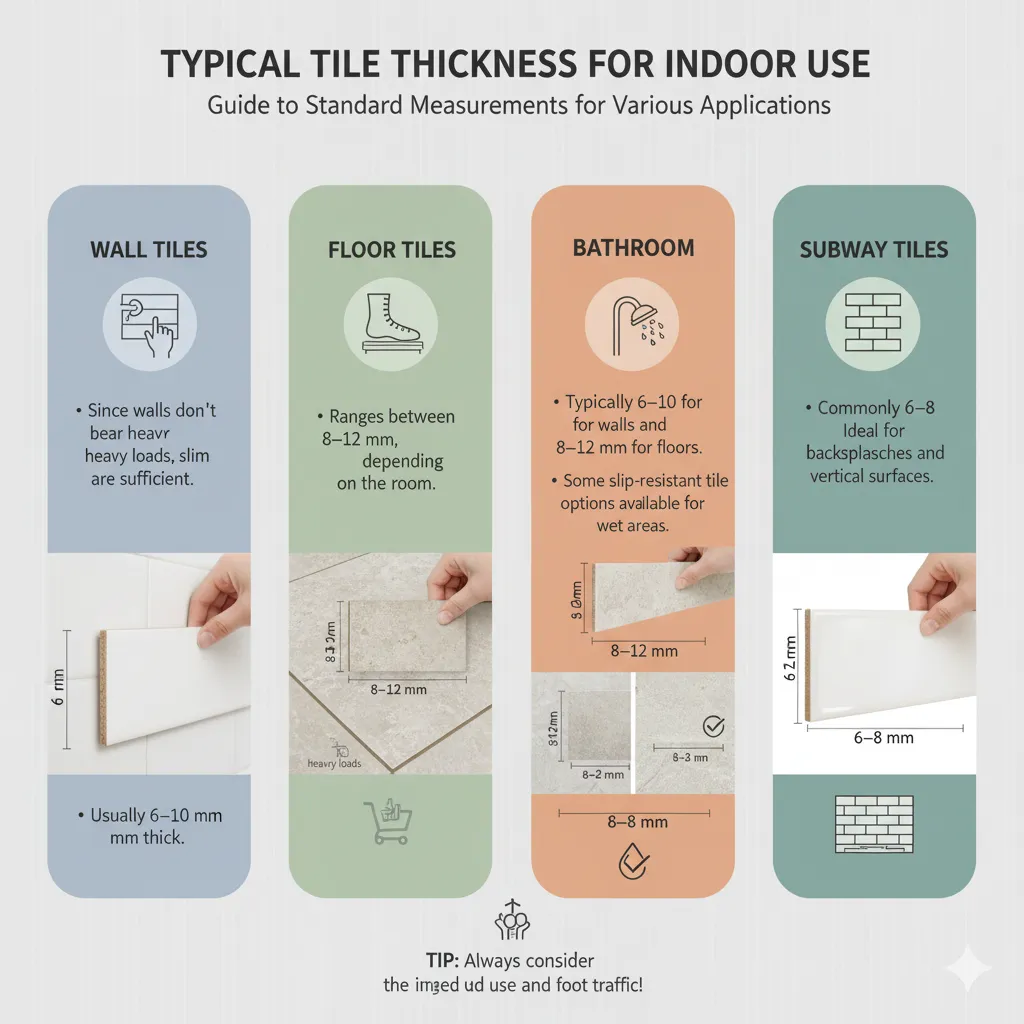
Indoor tiles are designed for comfort, style, and moderate durability since they’re mostly protected from harsh elements.
Here’s a breakdown of indoor tile thickness:
• Wall tiles: Usually 6–10 mm thick. Since walls don’t bear heavy loads, slim tiles are sufficient.
• Floor tile: Ranges between 8–12 mm, depending on the room.
• Bathroom tiles: Typically 6–10 mm for walls and 8–12 mm for floors, with some slip resistant tile options available for wet areas.
• Subway tile: Commonly 6–8 mm, ideal for backsplashes and vertical surfaces.
Indoor applications prioritize style, easy maintenance, and compatibility with underfloor heating systems. Thinner tiles often work well here, but they should still be durable enough for high traffic areas like hallways and kitchens.
Typical Tile Thickness for Outdoor Use
Outside tiles face unique challenges: weather fluctuations, heavy loads from furniture, and exposure to water and UV rays. To withstand these conditions, outdoor applications demand thicker and more durable tiles.
• Outdoor floor tiles: Generally 10–20 mm thick.
• Patio tiles: Often 20 mm porcelain tiles are used due to their strength and slip resistance.
• Natural stone tiles: marble, granite, or travertine typically range between 15–30 mm, offering extra strength for outdoor areas.
• Unglazed tiles: Popular for outdoor use because they are denser and more slip resistant than glazed versions.
For outdoor applications, always choose tiles that are suitable for heavy foot traffic, durable under extreme weather, and slip resistant to ensure safety.
Comparing Indoor and Outdoor Tile Thickness
Here’s a simple comparison to highlight the differences:
| Application | Indoor Tile Thickness | Outdoor Tile Thickness |
|---|---|---|
| Wall Tiles | 6–10 mm | Not common (indoor only) |
| Floor Tile | 8–12 mm | 10–20 mm |
| Bathroom | 6–10 mm (walls), 8–12 mm (floors) | 15–20 mm (around pools/patios) |
| Natural Stone | 10–15 mm | 15–30 mm |
| Porcelain Tiles | 8–12 mm | 10–20 mm |
| Ceramic Tiles | 6–10 mm | 10–15 mm (less common) |
Key takeaway: Outsite tiles must be thicker and more durable to withstand the elements and heavier loads, while indoor tiles can be thinner as they face less stress.
Factors That Influence the Right Tile Thickness
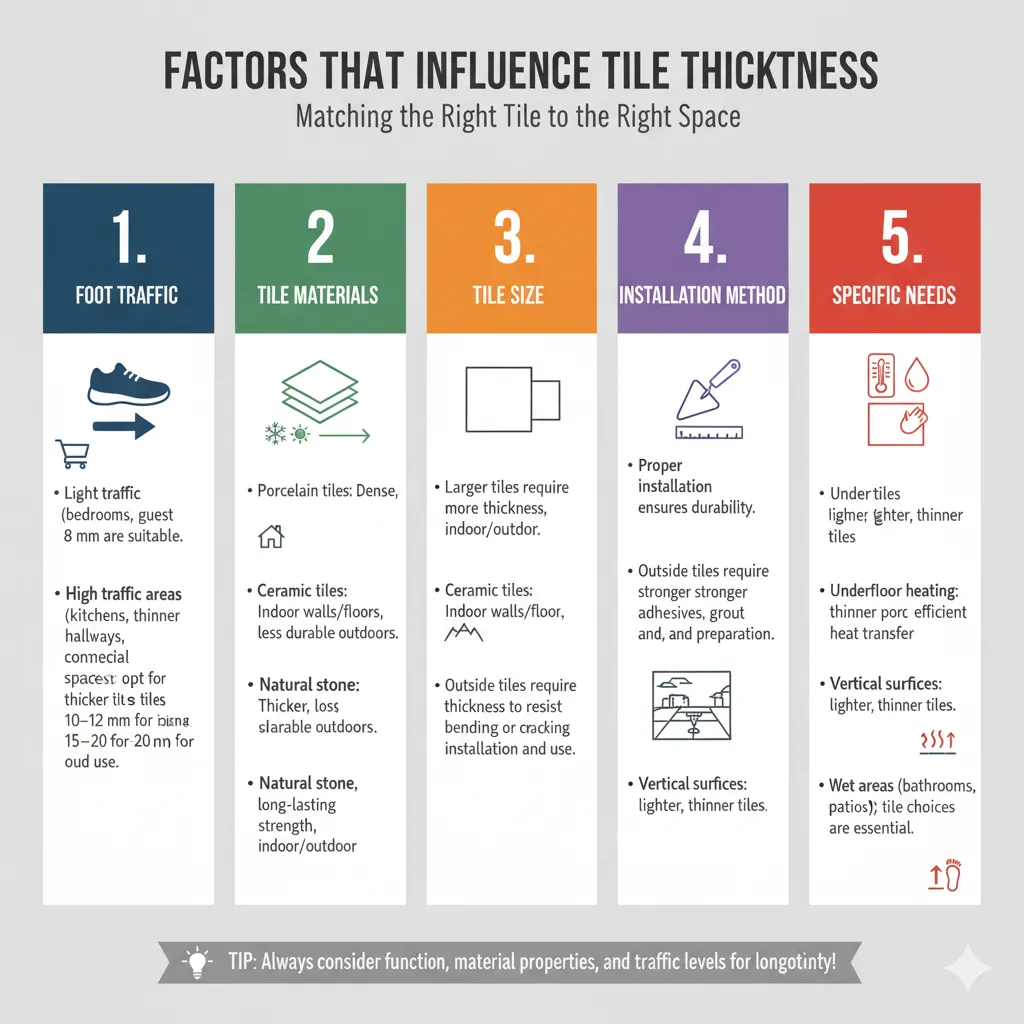
Choosing the right tile thickness depends on more than just indoor or outdoor use. Consider the following factors:
1. Foot Traffic
• Light traffic (bedrooms, guest rooms): thinner tiles around 8 mm are suitable.
• High traffic areas (kitchens, hallways, commercial spaces): opt for thicker tiles (10–12 mm for indoor, 15–20 mm for outdoor).
2. Tile Materials
• Porcelain tiles: Dense and durable, ideal for both indoor and outdoor use.
• Ceramic tiles: Great for indoor walls and floors but less durable outdoors.
• Natural stone (marble, travertine, granite): Typically thicker, providing long-lasting strength for both indoor and outdoor areas.
3. Tile Size
Larger tiles require slightly more thickness to resist bending or cracking during installation and use.
4. Installation Method
Proper tile installation ensures durability. For example, outside tiles require stronger adhesives, grout, and preparation compared to indoor tiles.
5. Specific Needs
• Areas with underfloor heating benefit from tiles that transfer heat efficiently, usually thinner porcelain.
• For vertical surfaces, lighter, thinner tiles are preferable.
• In wet areas like bathrooms or patios, slip resistant tile choices are essential.
Choosing the Right Tile for Indoor Applications
When selecting indoor tiles, prioritize comfort, aesthetics, and practicality.
• Wall tiles: Go for thinner, lightweight ceramic or porcelain options for easier installation.
• Tile flooring: Use thicker tiles like porcelain or natural stone in high traffic areas for durability.
• Subway tile backsplashes: Thin, stylish tiles work perfectly for kitchens and bathrooms.
• Underfloor heating: Choose tiles that balance thickness with heat transfer efficiency.
Remember: Indoor tiles don’t need to withstand the elements, but they must still handle daily wear and tear.
Choosing the Right Tile for Outdoor Applications
Outdoor areas demand more careful planning.
• Patios and pathways: Choose thicker porcelain tiles (20 mm) or natural stone for durability.
• Pool surroundings: Opt for slip resistant, water-resistant tiles that can handle constant exposure to water.
• Driveways: Only heavy-duty natural stone or extra-thick porcelain tiles can withstand vehicle loads.
• Outdoor walls: Use thicker, weather-resistant tiles only if necessary, as lighter options are generally preferred for vertical surfaces.
Here, tile thickness, durability, and slip resistance are crucial factors for long-lasting outdoor installations.
Mistakes to Avoid When Choosing Tile Thickness
Many homeowners make costly mistakes by ignoring tile thickness. Watch out for these:
• Using indoor wall tiles outdoors: Thinner tiles won’t withstand outdoor use.
• Ignoring foot traffic: Using thinner tiles in high traffic areas can lead to cracks.
• Not considering tile materials: For example, ceramic tiles may not be suitable for patios compared to porcelain tiles.
• Skipping proper installation: Even the right thickness won’t last if tiles aren’t installed correctly.
• Overlooking slip resistance: Especially in outdoor areas and bathrooms.
Expert Tips for Tile Installation
• Always consider the intended use of the space before selecting tiles.
• Balance aesthetics with practicality choose the right tile thickness that suits both design and durability needs.
• For outdoor use, thicker tiles are always safer.
• Hire a professional installer for complex projects to ensure tiles are installed correctly.
• Don’t forget about grout, adhesives, and surface preparation these play a major role in durability.
Conclusion
When comparing indoor and outdoor tile thickness, the rule is simple: indoor tiles can be thinner, while outside tiles must be thicker and more durable.
• Indoor applications: prioritize style, ease of maintenance, and comfort.
• Outdoor applications: focus on thickness, durability, and slip resistance to withstand weather and heavy foot traffic.
By understanding different tile types, materials, and intended uses, you can choose the right tile thickness for your project and ensure your tile flooring or wall installation lasts for years to come.
At Bluecera, we combine quality craftsmanship with advanced technology to offer a wide range of indoor and outdoor tiles that meet these standards. Whether you are upgrading your interiors or designing robust outdoor spaces, our expertly engineered tiles deliver the perfect balance of beauty, strength, and reliability. Trust in our experience to provide tiles that are built to last and elevate any environment.
FAQs
1. What type of tile is best for outdoor use?
Answer: The best type of tile for outdoor use is usually porcelain, natural stone, or travertine. These materials are more durable, weather-resistant, and designed to handle heavy foot traffic compared to indoor wall tiles or thinner options.
2. How does the tile manufacturing process make a difference in thickness?
Answer: The process makes a big impact on tile thickness and durability. For example, porcelain is fired at higher temperatures than ceramic, making it denser, harder, and better suited for outdoor applications, while ceramic is usually thinner and best for indoor walls.
3. Can glass tiles be used outdoors?
Answer: Glass tiles are typically used indoors for walls, backsplashes, and bathroom accents because they are thinner and more decorative. They are not the best choice for outdoor flooring, as they can be slippery and less durable under weather changes.
4. Is choosing thicker tiles always an excellent choice?
Answer: Not always. While thicker tiles are stronger and can handle more wear, the excellent choice depends on the intended use. For indoor walls, thinner tiles are easier to install, while outdoor patios and high-traffic areas benefit from thicker tiles.
5. How does the layer of adhesive affect tile installation?
Answer: The layer of adhesive plays a crucial role in proper tile installation. A thicker adhesive bed may be required for outdoor tiles to ensure stability, while indoor wall tiles often need only a thin, even layer for secure placement.
6. Does tile texture matter for indoor vs outdoor applications?
Answer: Yes, texture is very important. Smooth tiles may work well indoors on walls or low-traffic areas, while textured or slip-resistant surfaces are recommended outdoors to prevent accidents, especially in wet conditions.
7. How does location influence the right tile thickness?
Answer: Location determines the load and exposure tiles will face. For instance, bathroom walls may only need thin ceramic tiles, while an outdoor patio exposed to furniture and heavy foot traffic requires thicker, stronger tiles.
8. What should you consider when creating a tile plan for your home?
Answer: When creating a tile plan, consider the intended use, location, and durability needs. Indoor tiles can be thinner and decorative, while outdoor tiles should be thicker, slip-resistant, and capable of withstanding the elements.