Basin vs Sink: Key Differences in Meaning & Usage Explained


09 August 2025
Understanding the distinction between basins and sinks is essential for homeowners, contractors, and anyone involved in plumbing or home design.
Although in everyday conversation the two terms are frequently replaced with each other, they do differ in their significant definitions, implementations, and cultural backgrounds that influence their buying choices, requirements during installation, and design preferences. This detailed guide on basin vs sink comparison helps clarify those distinctions for smart decision-making.
What Is a Basin? Definition and Core Characteristics
A basin is basically a container in the form of a bowl with the purpose of containing water. Plumbing refers to basins as shallow and wide containers with their main usefulness being washing hands, face, and performing light chores. The word basin comes from the old French term “bacin”, i.e., a shallow vessel.
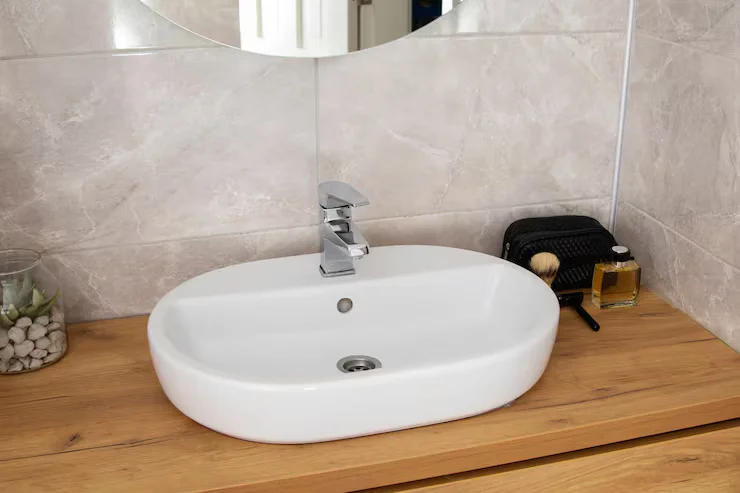
Key characteristics of basins:
• Generally shallower depth than sinks
• Wider, bowl-shaped design
• Often used in bathrooms and powder rooms
• Emphasis on hand washing and personal hygiene
• Can be vessel-style or integrated into countertops
Common basin types include:
• Vessel basins that sit on top of counters
• Undermount basins installed below counter surfaces
• Semi-recessed basins partially embedded in countertops
• Wall-mounted basins attached directly to walls
This discussion of sink vs wash basin makes it evident that design, usage, and even terminology depend on the room’s function and visual needs.
What Is a Sink? Definition and Primary Functions
A sink refers to a permanent basin, which has a water supply and a drainage system, and it can be used to perform several washing and cleaning tasks. The sinks normally have deep bowls compared to basins and are fitted with faucets, pipe holes, and sometimes other extras such as dispensing soap or sprayers.
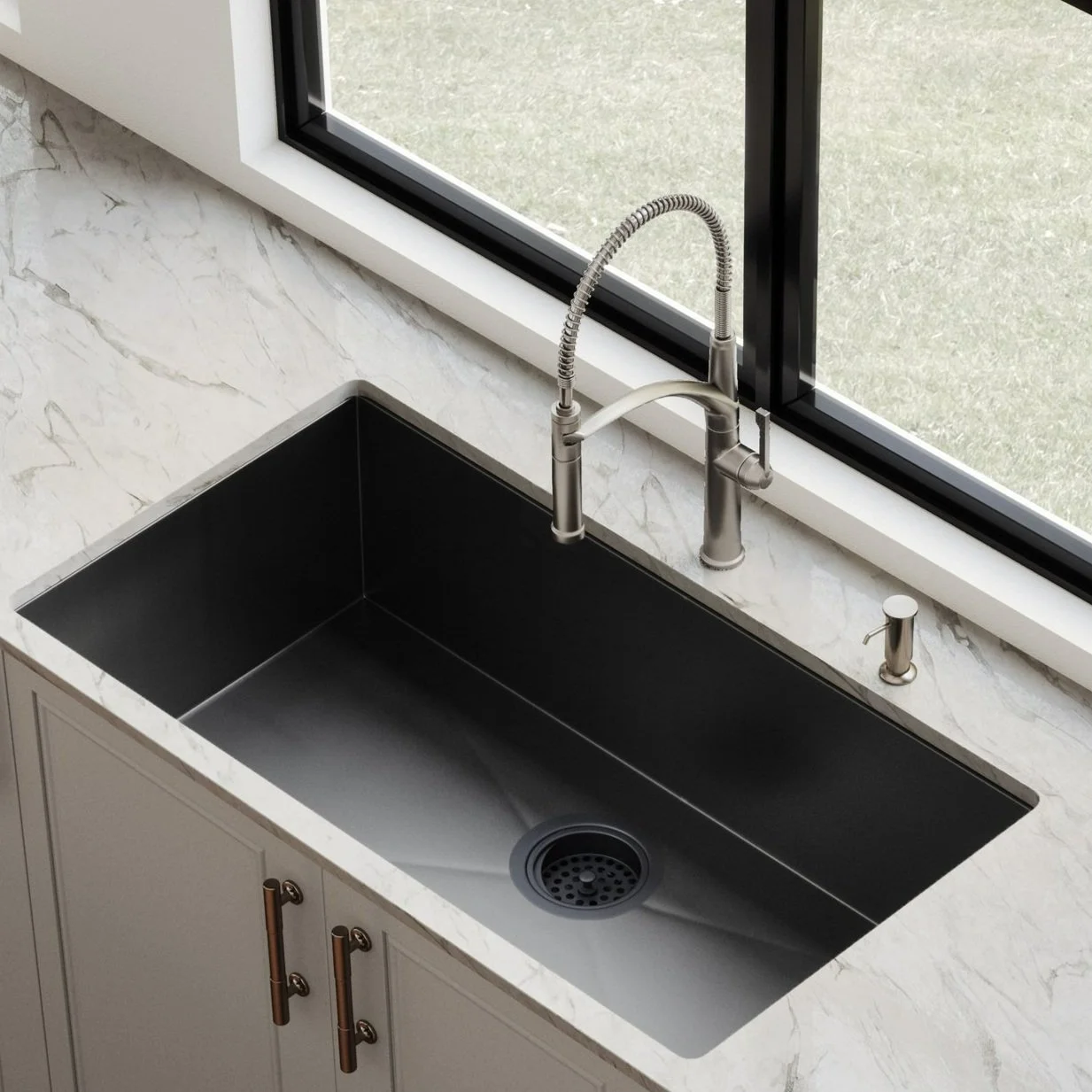
Key characteristics of sinks:
• Deeper bowl design for containing water and debris
• Integrated plumbing connections
• Multiple functional purposes beyond hand washing
• Available in single or multiple bowl configurations
• Often includes additional features like cutting boards or colanders
Common sink applications:
• Kitchen food preparation and dishwashing
• Utility room cleaning tasks
• Bathroom grooming and hygiene
• Laundry room washing functions
Exploring the single bowl sink vs double configurations helps determine the level of flexibility and usage needed in your space. While a single basin sink vs double setup might be sufficient for smaller households, a double basin vs single basin sink arrangement often suits multitasking kitchens.
Regional and Cultural Differences: Basin vs Sink Usage
The distinction between wash basin vs sink is a major variable in the context of various English-speaking countries, which causes confusion in international trade, as well as in internet product reviews.

British English language: In Britain, the term basin is used most commonly to refer to sanitation rooms and amenities in the bathroom, which are involved with hand washing, as well as personal cleanliness. Wash basins are found in the bathroom, whereas in the kitchen, there are sinks common in British households. The latter difference is still potent in the British plumbing vocabulary and building regulations.
Use in American English: Americans refer to both kitchen and bathroom sinks simply as sinks; however, in more formal situations and when describing the product, basin may also be used. In America, the phrase bathroom sink prevails in the language, whereas basin can commonly mean a larger geographical attribute (as well as a decorative container).
Australian and Canadian: These areas combine the use of both the British and American words, with the term basin used in more formal or technical settings and the use of the word sink in everyday language.
This global disparity further reinforces the practical relevance of the sink vs wash basin terminology depending on regional usage and interior design context.
Functional Differences Between Basins and Sinks
It helps understand basin vs sink functionality, which is why it is valuable to find out which fitting is the most suitable in a particular application and the needs of a particular user.
Basin functionality:
• Optimized for hand washing and light cleaning
• Shallow design prevents splashing
• Wide surface area accommodates comfortable use
• Often features overflow drains for safety
• Designed for lower water volumes
Sink functionality:
• Accommodates heavy-duty cleaning tasks
• Deeper bowls contain larger volumes of water
• Multiple compartments for different functions
• Stronger construction for handling heavy items
• Integrated accessories like garbage disposals
Whether you’re choosing between an inset sink vs undermount, or evaluating single bowl sink vs double, understanding usage patterns is key to finding the right fit.
Basin vs Sink – A Quick Comparison
|
Feature |
Basin (Bathroom) |
Sink (Kitchen/Utility) |
|
Use |
Hand & face washing |
Dishwashing, cleaning tasks |
|
Material |
Ceramic, glass, stone |
Stainless steel, composite, fireclay |
|
Size |
12–24" diameter, shallow depth |
24–36" wide, deeper bowls |
|
Design |
Stylish & compact |
Functional & spacious |
|
Maintenance |
Easy to clean, needs gentle care |
Regular deep cleaning needed |
Design and Installation Considerations
• Basin design features: Basins are designed as places of the first importance that focus on looks and comfort when handling personal hygiene. Vessel basins are used to give dramatic focal points on modern bathrooms and an undermount basin gives a smooth blending with the countertop. The low profile prevents splash-backs and makes it look more elegant.
• Sink design characteristics: Sinks are designed with an eye on the functionality and durability of different tasks. Kitchen sinks are in a deep bowl, have several compartments and are very heavy. Utility sinks are made with tough materials and industrial finishes; they have a large capacity to fit bulky objects and help with unseemly cleanup tasks.
Explore Our Washbasin Collection
From stylish basins to highly functional utility sinks, even detailed options like inset sink vs undermount can determine how seamless and ergonomic your setup is.
Installation requirements differ significantly:
• Basins often require custom countertop modifications
• Vessel basins need specific faucet heights and styles
• Sinks require standardized plumbing connections
• Deep sinks may need additional structural support
Material Choices: Basin vs Sink Options
When you go about your bathroom or kitchen design, you need to know the difference between basins and sinks in terms of the material. Although both of them often fulfill one and the same functional task, to control the water flow and facilitate the hygienic procedure or cleaning operations, they are normally applied in various situations and have different material priorities to best fit the environment they would be placed in. The interest in basins tends to be more about their aesthetic and visual value in the bathrooms, whereas sinks tend to have more of the heavy-duty aspect in kitchens or utility areas.
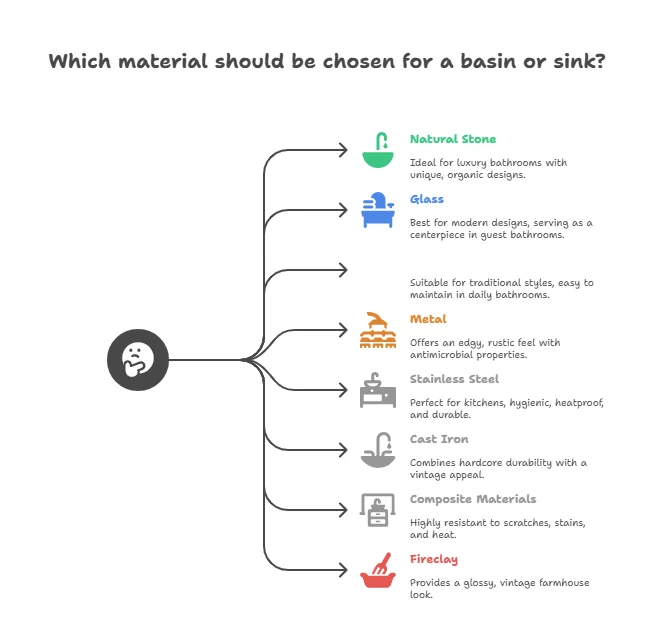
Basin materials focus on aesthetics and water resistance:
• Natural stone (like marble, granite, or travertine): Natural stone basins are also ideal for creating luxury applications with the inimitable influence of their natural beauty and organic designs. All the pieces are custom-made, and they provide a customized attraction to luxury bathrooms.
• Glass (tempered or frosted): Glass basins are a popular trend in modern washbasin designs due to their striking features in enticing shapes and colorful finishes that serve as a centerpiece. These can be used in guest bathrooms or powder rooms where looks are king.
• Ceramic (porcelain or vitreous china): Ceramic basins are the go-to material of traditional styles, and they have a number of benefits: they feature clean lines, smooth surfaces, and are easy to maintain. It can be used in a day-to-day bathroom.
• Metal (copper, brass, or stainless steel): Metal basins come with an edgy, rustic, or minimalistic feel with decent durability and antimicrobial qualities (copper in particular).
Sink materials prioritize durability and functionality:
• Stainless steel: Stainless steel is especially popular as a material to make kitchen sinks because it is hygienic, heatproof, and almost literally indestructible, which is beneficial in households with active lifestyles. It is also simple to clean and it goes well with modern appliances.
• Cast iron with porcelain coating: A shape that is both hardcore and vintage. The enamel coating makes the coating stain resistant and the core material will last for at least decades.
• Composite materials (granite or quartz composites):. These sinks are highly resistant to scratches, stains, and heat, which makes them befitting in the modern kitchen environments that require them to last a long time.
• Fireclay: Fireclay sinks are glossy and carry with them the old farmhouse appeal, are highly resistant and ideal for providing the vintage look to kitchen settings.
Whether you're deciding between a decorative vessel or a single basin sink vs double, the material used also affects longevity, appeal, and use cases.
Size and Capacity Differences
Another essential point to consider when you have to decide whether you need a basin or sink is the understanding of their size and capacity. These physical qualities affect how properly the fixture should match your house's domestic needs and meet your daily desires. Basins are focused for bathrooms, made in a way that they can be both compact and comfortable, while sinks are intended for big volumes and multi-purpose operation.
Basin dimensions typically feature:
• Diameter ranges from 12 to 24 inches: These are perfect in those bathrooms that do not have much space because they are large enough to clean your hands or face without drowning the vanity.
• Depth typically 4 to 6 inches: The average depth that will allow using it without splashes and allow access to everyone regardless of age.
• Compact footprint for space-efficient installation: They were designed to make use of the maximum amount of space on the countertop or walls, thus fit ideal in small or guest bathroom
• Proportioned for comfortable hand washing: It has an ergonomic design that makes it easy to use on a daily basis, splashing minimally in water, or causing any strain.
Sink dimensions vary widely:
• Kitchen sinks range from 24 to 36 inches wide: These large sized dimensions would allow a lot of space to wash dishes, food preparation, or cleaning of big utensils.
• Depth typically 8 to 12 inches for full functionality: The deeper ones will contain splashing and allow pots and pans, as well as baby baths.
• Multiple bowl configurations available: Features such as double-bowl or triple-bowl or divided sections are versatile in the multi-tasking capacity.
• Sized for specific task requirements: Starting with bar sinks and leading to the farmhouse sinks, every one of these sinks has dissimilar purposes depending on height, width, and form.
Kitchen professionals often debate the double basin vs single basin sink setups, weighing the pros of multitasking versus spacious single compartments.
Maintenance and Cleaning Differences
Another essential point to consider when you have to decide whether you need a basin or sink is the understanding of their size and capacity. These physical qualities affect how properly the fixture should match your house's domestic and meet your daily desires. Basins are focused for bathrooms, made in a way that they can be both compact and comfortable, while sinks are intended for big volumes and multi-purpose operation.
Basin maintenance:
• Shallow design simplifies cleaning: With fewer corners and less surface area, most basins are easy to wipe down.
• Vessel styles require careful cleaning of edges: The open face of the vessel basins can be subject to dust and soap scum, which often need cleaning.
• Natural stone requires specialized care products: Stone basins must be cleaned with pH-neutral or stone-safe cleaners to prevent etching or damage.
• Less prone to heavy staining from food debris: Basins are largely employed in hand washing or rinsing of the face, and they tend to evade such grease and grime that is prevalent in kitchens.
Sink maintenance:
• Deeper bowls may collect more debris: Crumbs, food waste, and soap scum can build up in corners and around drains.
• Multiple compartments require thorough cleaning: Each bowl or section must be individually scrubbed to avoid bacterial growth and odor.
• Garbage disposal units need regular maintenance: Integrated disposals require de-clogging and cleaning to remain efficient.
• Heavy-duty use demands frequent deep cleaning: Kitchen sinks require daily use of strong cleaning agents since they come into contact with food residues and other harsh substances.
From a cleaning standpoint, knowing whether a single bowl sink vs double arrangement affects your routine is a small but impactful part of sink selection.
Choosing Between Basin and Sink for Your Project
Whether to select a basin or sink is not a matter of aesthetics only; it is about a fitting appearance with functionality. Although the two have the same purpose in holding and draining water, they are used differently. To make your selection, it will help you to identify your priorities concerning space, use and design.
Consider a basin when:
• Prioritizing aesthetic appeal in bathrooms: Basins often act as decorative highlights in modern or designer bathrooms.
• Space limitations require compact fixtures: Perfect for apartments, powder rooms, or en-suites with minimal square footage.
• Primary use involves hand washing and hygiene: A basin provides everything needed for personal hygiene without overbuilding.
• Creating a spa-like bathroom environment: Materials like stone and glass elevate the ambiance, turning the space into a relaxing retreat.
Choose a sink when:
• Functionality takes precedence over aesthetics: Ideal for utility, kitchen, or laundry rooms where performance is key.
• Multiple users require efficient cleaning space: A double-bowl sink allows simultaneous use for busy households.
• Heavy-duty tasks demand durable construction: Be it cleaning up spillage or washing cookware, sinks must be tough and be able to take the abuse of continued water exposure.
Professional Installation Recommendations
Whichever term you would prefer to use, it is essential to have them installed by a professional to get the best performance and life span of the equipment. Certified plumbers are aware of the local standards, requirements of drainage, structural initiatives, which influence the performance of the fixtures.
Professional benefits include:
• Code compliance assurance
• Warranty protection maintenance
• Proper water pressure optimization
• Structural integrity assessment
Knowledge of the difference between a basin and a sink allows a clearer communication between the homeowner, the designer and the contractor with regard to what is required in the project. When selecting functional kitchen sinks or effective luxury bathroom basins, it is vital to distinguish between these two, as this will lead to positive results that will fulfill both the design and practical considerations.
Bluecera: Trusted Partner in Premium Sanitaryware
Regarding qualitative basins, sinks, and other sanitaryware, Bluecera is known as one of the global brands that excel in terms of design, innovativeness, and durability. Being a leading manufacturer and exporter of sanitaryware, Bluecera has a wide range of products, including washbasins, water closets (WC), urinals, bidets, pedestal basins, wall-hung toilets, etc. They design their products with precision and manufacture them using high-quality materials like ceramic, vitreous china and composite blends, which is innovative to match the professional standards of the industry. Bluecera premium products will make a good choice in your luxurious hotel bathroom and will do the same job in upgrading the modern home.
Conclusion
The well-known dilemma between a basin and a sink is not a semantic issue but is instead a choice that determines the advantages of the basin vs sink by practicality, design objectives, and even lifestyle requirements. Basins work well in building beautiful spa-like areas that are conducive to hygiene and personal cleaning and the sinks are functional and prone to extremely heavy use on both kitchen and utility-intensive workstations. Homeowners and designers can make knowledgeable decisions on the optimal products by studying the main distinctions in terms of material, scale, maintenance and installation — from single basin sink vs double arrangements to the stylistic debate of inset sink vs undermount.